



Part 1 of this series announced the successful completion of GÉANT’s IP backbone network migration. But behind that milestone lies an inspiring story: one of hidden complexity, a fundamental shift in how GÉANT thinks about its network, and the cross-functional teamwork that made it all possible.
Why the migration needed a new approach
The GÉANT IP/MPLS backbone had served Europe’s Research and Education reliably for over a decade, but by the early 2020s it was approaching the end of its lifecycle and could no longer meet the growing performance and capacity demands of global, data-intensive scientific collaboration. Following a competitive tender in 2023, GÉANT awarded the project to Nokia and Nomios, introducing Nokia’s high-performance IP networking technology able to support 800G connectivity across its entire pan-European network.
Migrating a live IP backbone while maintaining uninterrupted service could not rely on manual configuration alone. From the very beginning, GÉANT’s IP refresh project aimed for more than a simple technology refresh: the entire migration would be delivered through automation.
The road to GAP
GÉANT’s network automation journey began well before the IP refresh. Since 2019, the team had been progressing through successive tools for configuration management. All in search of a more structured, repeatable approach to network operations.
In April 2023, adoption of the open–source Workflow Orchestrator (WFO), developed by SURF and ESnet, marked a turning point. Building on WFO and additional tools, the team created the GÉANT Automation Platform (GAP).
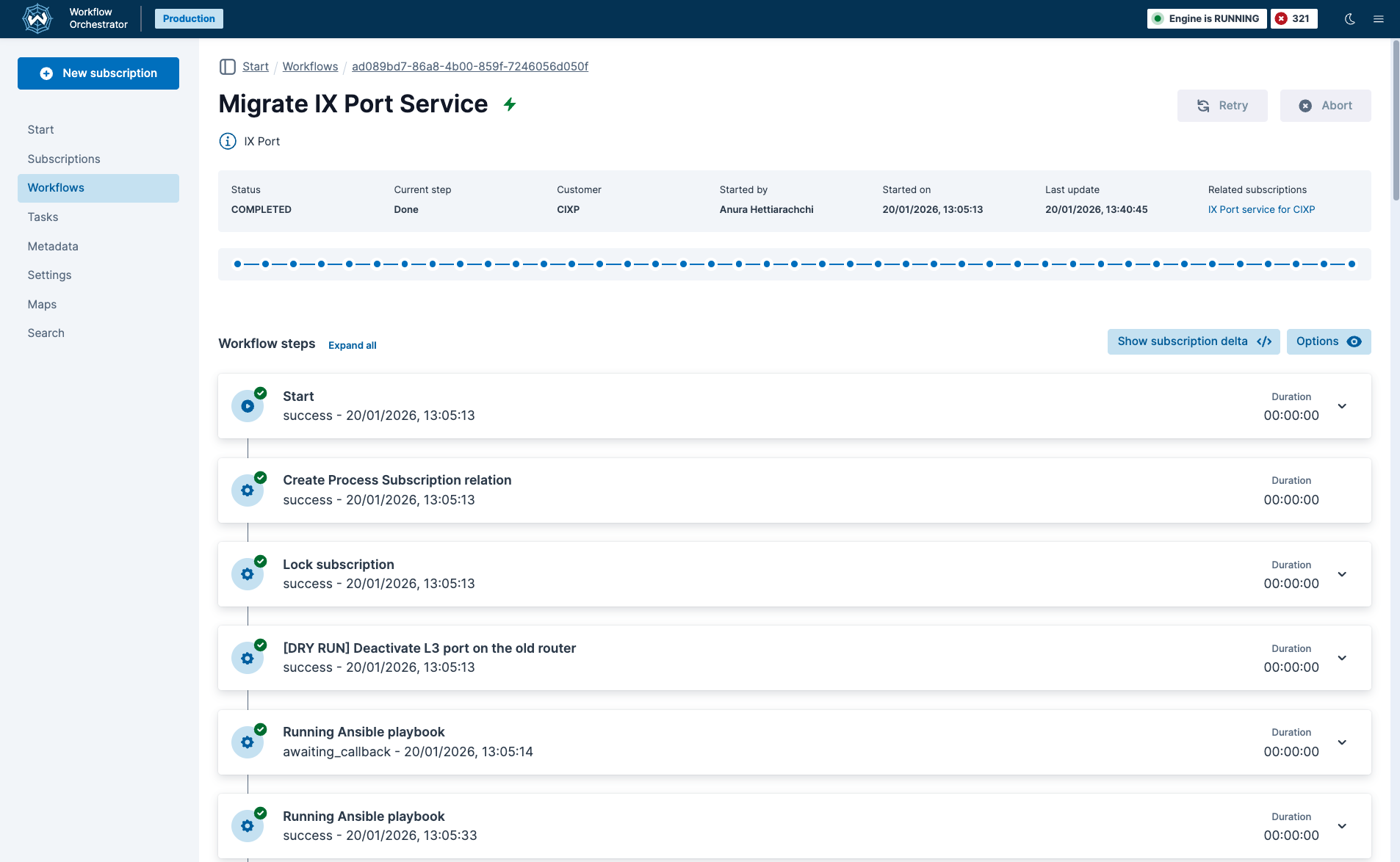
The GAP platform enables operators to run workflow-driven processes in a safe and repeatable way. It models network intent, tracks state and drives execution through orchestration, with built-in validation and full visibility of actions and logs. The GAP became the foundation for the IP migration project, enabling large-scale changes to be designed, tested and deployed safely across the live network.
But the platform itself was only part of the shift. GÉANT’s IP network migration required a different way of thinking about the network entirely.
“Instead of treating the network as a collection of numbers, values and configuration lines, we started to treat it more like a software product. That is how the GAP came to be.” — Simone Spinelli, Network Software Manager
Moving toward a design-first mentality
Bringing automation and orchestration into a live network is inherently complex. While processes can be designed in advance, a live, multi-service environment always reveals hidden dependencies, operational realities and custom configurations that lived only in the institutional knowledge of the engineers who built them.
As the IP refresh project progressed, the GÉANT team found that existing practices and service-dependent behaviours could not simply be transferred to a new platform without rethinking how the network was designed and operated. Before automation could touch any of it, the team had to clean up, restructure and document what was already there.
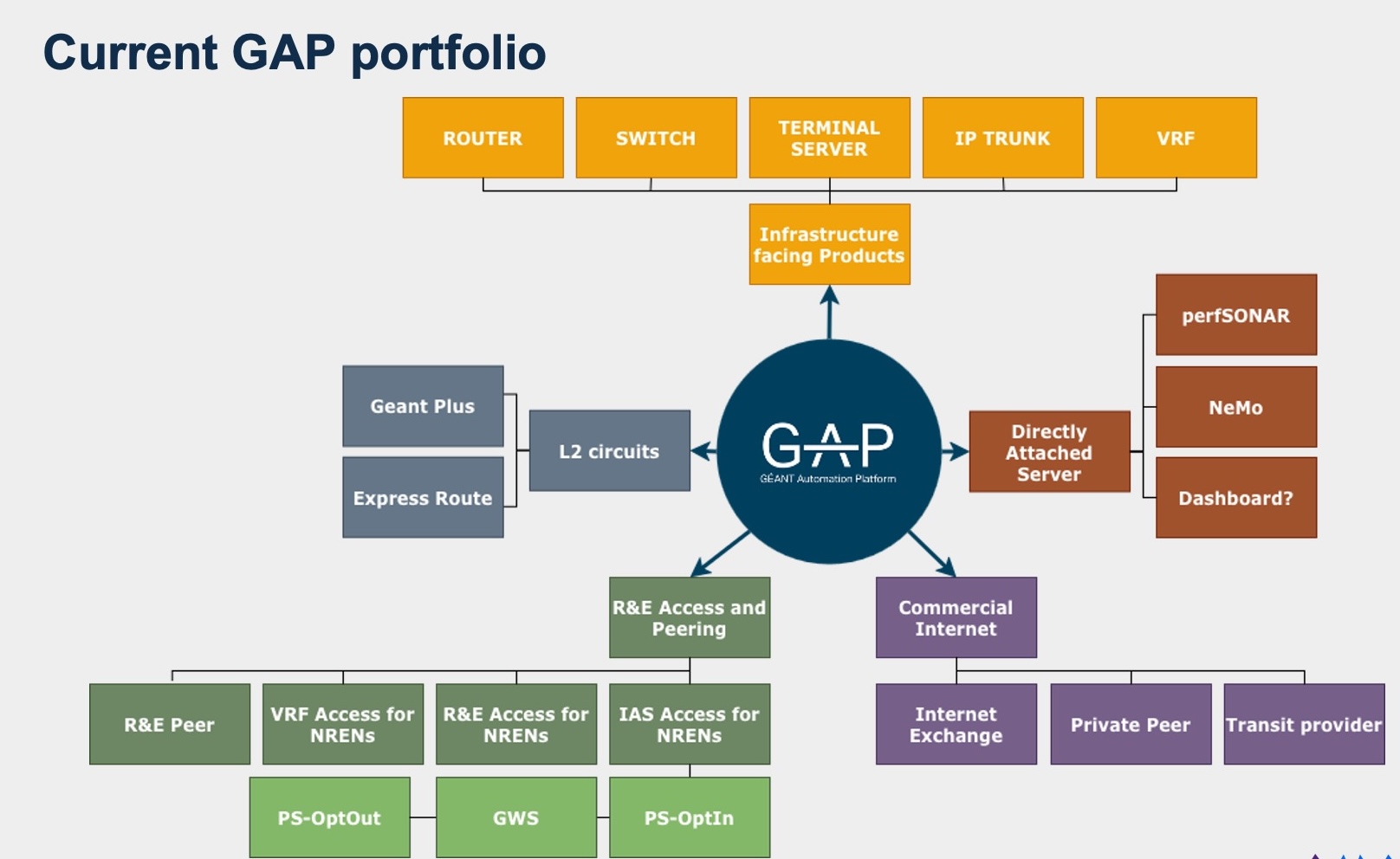
In practice, moving from one platform to another meant re-examining each service from first principles and rebuilding it as a clean model, rather than replicating what had existed before. Design became the primary source of truth, superseding the live network itself.
“We had to ask: what actually makes a service a service, and what do we want it to do? You cannot simply translate configuration from one vendor to another. You have to understand what each service is really meant to be.” — Karel van Klink, Network Engineer
That process demands a lot of testing and iteration. Models are continuously revised as cases emerge, workflows are tested and rebuilt. A robust lab environment, where testbed conditions are exactly identical to the live production, was essential to building the confidence needed before operating on the live network. It allowed the team to make small mistakes, understand how changes would affect one another and, most importantly, take the time to get things right.
“The lab was a really big thing for us. When we push the button in the lab and see it roll out perfectly, we know that when it goes into production it is going to roll out exactly the same way.” — Rich Adam, Senior Network Engineer
Building additional capabilities
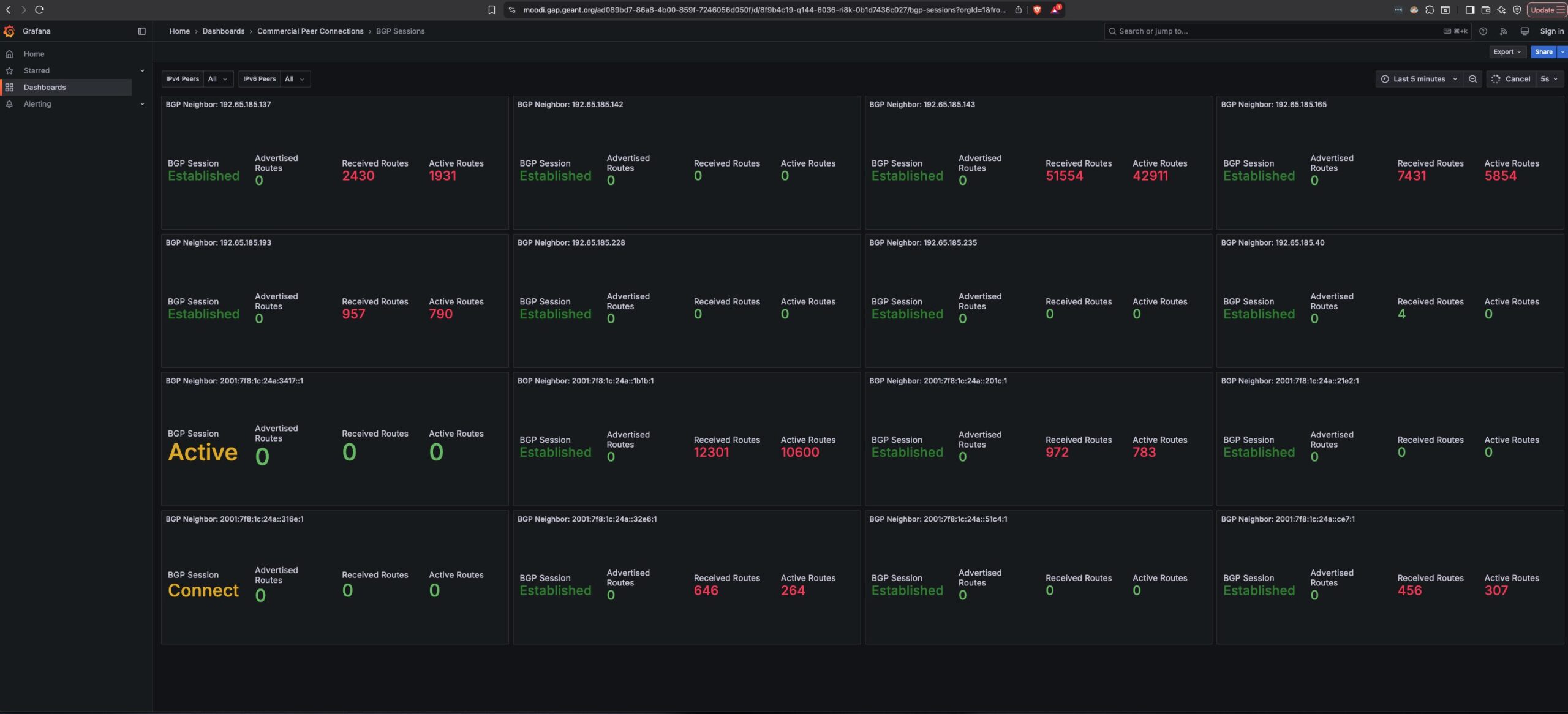
With a strong iterative process in place, the team continuously met challenges both small and big along the way. This created opportunities to customise and build the stack further on top of the GAP. One such case is Moodi – a telemetry stack integrated directly into the GAP and enabling network engineers to validate changes and observe their evolution over time. Only used briefly, at the start of the migration workflow, Moodi provides high-resolution telemetry, without the need for data storage.
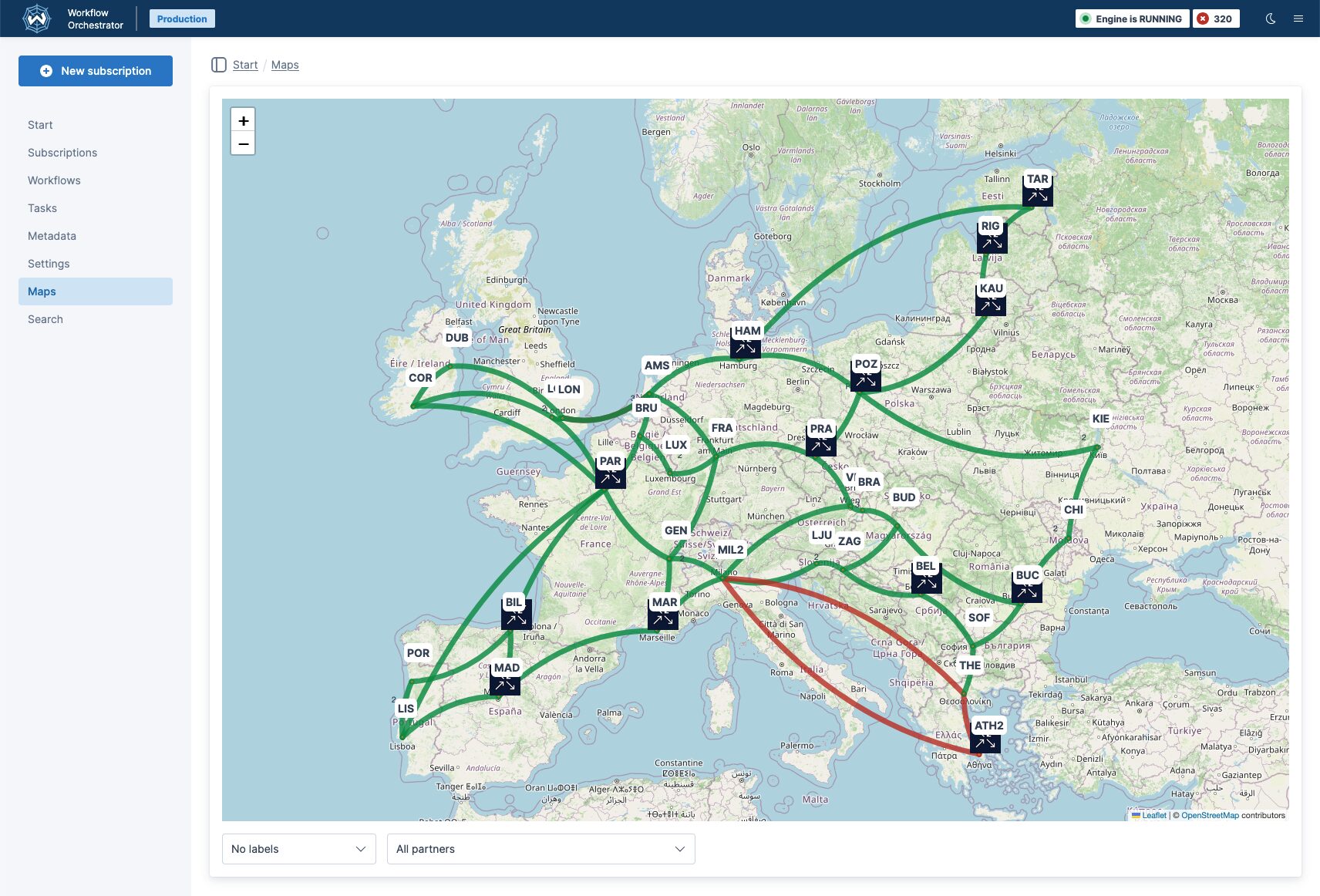
In addition to Moodi, the team built several other capabilities, including a map view of the entire network. These additions reflect the same design philosophy behind the GAP: build what you need, tailor it to the way network engineers work, and keep it open for others to use.
From core to edge: how the migration unfolded
With the GAP in place, GÉANT was able to move from designing, modelling and testing into live migration. The first phase began in June 2024, when the new Nokia routers were introduced into the backbone and initial links were migrated using automated workflows.
These early deployments validated that services and connectivity could be built, tested and documented through automation while keeping the production network running uninterrupted. As confidence in the approach grew, the scope of migration also increased.
In January 2025, the second phase started, extending the migration from the core into the edges of the network. Services were progressively moved to the new IP platform through the GAP, enabling transformation of the backbone in stages while ensuring continuity of network operations and providing the ultra-high performance needed for data-intensive research collaboration.
By project completion, the team had successfully migrated 1,240 services across 32 sites without a single service disruption.
Why collaboration was the real foundation
The GAP and the migration process could only succeed because various teams worked closely together. GÉANT’s software engineering, network engineering, architecture and network operations teams collaborated closely throughout design, development and deployment, while also coordinating with teams from NRENs and from Nokia and Nomios.
Software engineers focused on writing workflows and building a safe, testable and reusable automation logic. Network engineers translated services into operational intent and brought deep domain expertise. Architecture designers ensured consistency and alignment with long-term design goals, while operations teams became the primary users of the GAP, shaping its evolution through continuous feedback from day-to-day use.
“Network automation is not just a collection of scripts. At the end of the day it is a software product, with a network domain inside it. You need people from both worlds working together to make it happen.” — Fariman Torkashvand, Senior Software Engineer
What’s next for the GAP
Completing the IP migration is just a starting point. With the GAP established as the operational foundation, GÉANT can now explore capabilities that were previously out of reach. The most compelling near-term opportunity is self-service: enabling GÉANT NREN members to interact directly with network services, reducing turnaround times and giving users access to connectivity capabilities on demand.
GÉANT also remains an active contributor and an official partner to the global WFO open source community alongside multiple research and education networking organisations involved, sharing code, tools, and lessons learned so that others can benefit from what was built.


