



GÉANT was in Brazil last month for the RNP Forum 2026, hosted by our regional partner RNP, the country’s National Research and Education Network (NREN). Now in its 15th edition, the RNP Forum 2026 brought together leaders, experts, and communities from across Brazil’s research, education, and innovation ecosystem. Held under this year’s theme “Digital Sovereignty – Data, AI, and People,” the event explored how data, Artificial Intelligence (AI), and people connect to shape a more autonomous, secure, and inclusive digital future.
We were represented by our CEO Lise Fuhr, Chief Information Security Officer Ana Alves, and Senior Research Engagement Manager Daniela Brauner, who took part in panels, workshops, and meetings focused on digital sovereignty, cybersecurity, AI, and community collaboration.
Digital sovereignty on the global stage
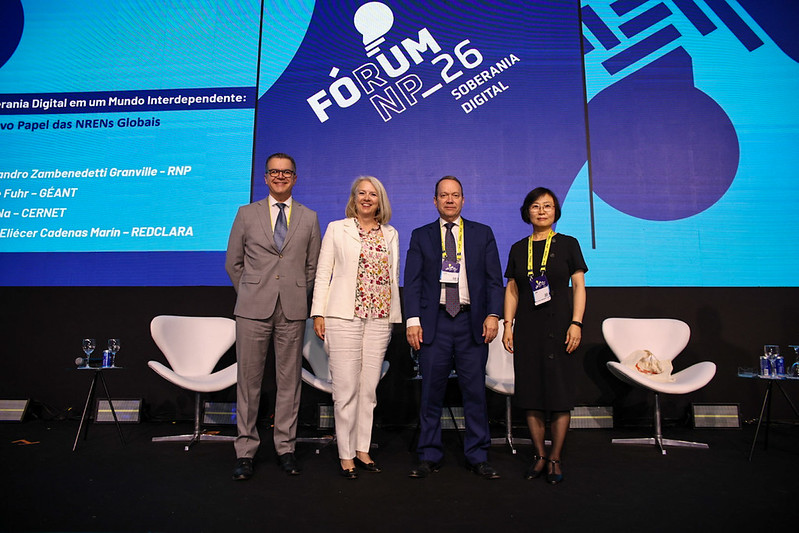
Lise joined the panel “Digital Sovereignty in an Interdependent World: The New Role of Global NRENs”, alongside Luis Eliecer Cadenas Marin (RedCLARA), Jennifer An (CERNET Corporation), and host Lisandro Granville (RNP). Bringing together perspectives from Europe, Asia, and Latin America, the panel set out to explore how NRENs can balance digital sovereignty with international collaboration, drawing on each region’s own realities, challenges, and viewpoints on infrastructure, data, and AI.
The conversation opened with this question: “What is the bigger risk today: technological dependence or digital fragmentation?” For Lise, the answer was clear: technological dependence. She pointed to the geopolitical risks of relying on a handful of tech players and argued that NRENs are uniquely placed to break that dependency. As she put it: “The NREN community is the ideal place to work together to break this dependency. We have both digital networks and human networks that can accelerate innovation in new solutions for the benefit of the global research and education (R&E) community. We need to remember that the internet started in our communities.”
From there, the panel turned to whether digital sovereignty is achievable without sacrificing efficiency, and how the rise of AI is reshaping the role NRENs play. Lise was also asked to reflect on Europe’s own experience: how the region balances strong regulation with digital innovation, and whether that model can translate to other parts of the world.
Ahead of the panel, Lise spoke with the RNP team about this balance. You can read her interview here.
Cybersecurity: from digital sovereignty to crisis response
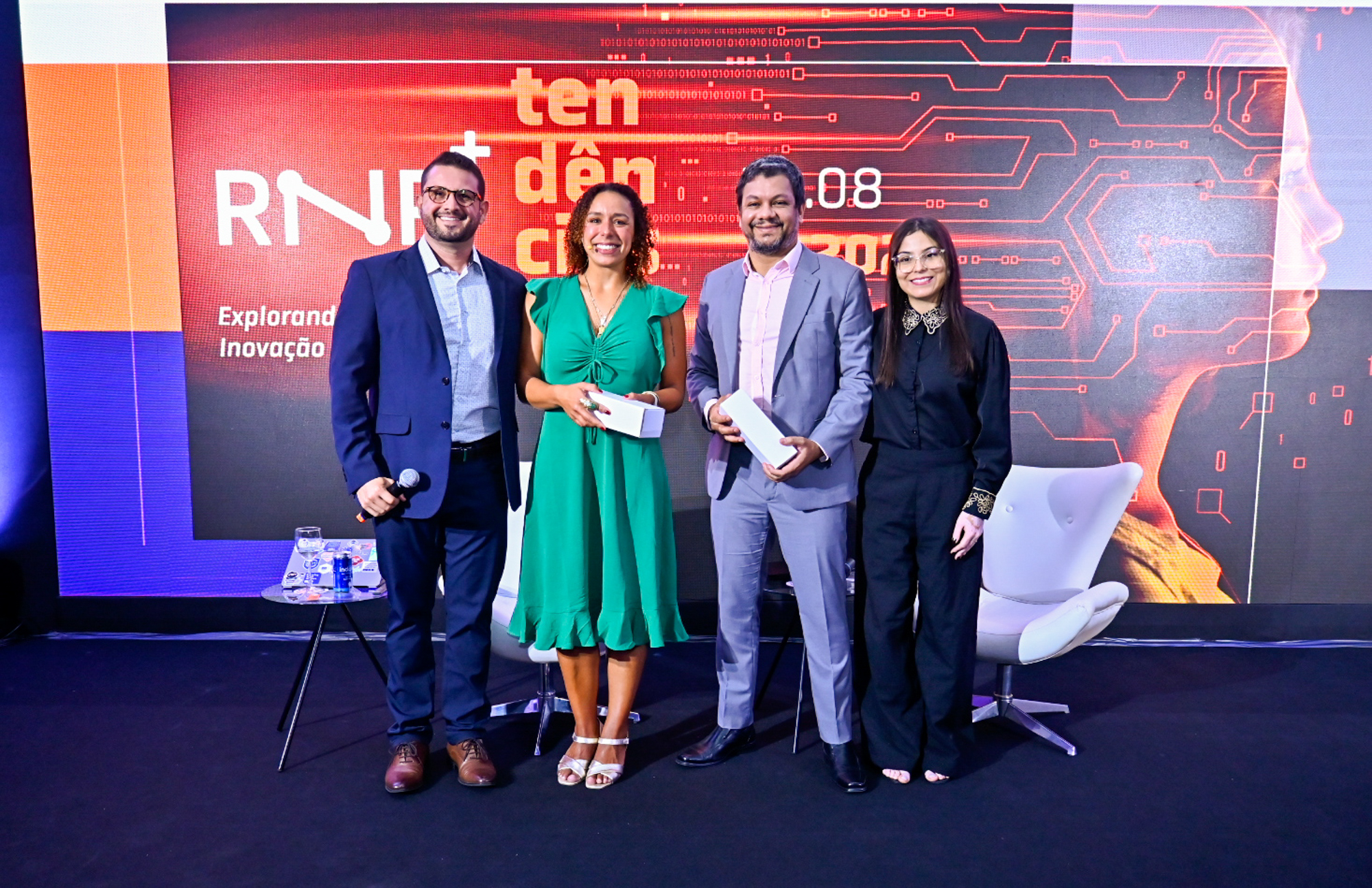
Ana Alves took the stage to unpack digital sovereignty through a cybersecurity lens, arguing in her panel that strategic dependencies and resilience are only ever as strong as the cooperation built around them. Her session sparked lively discussion and made clear just how eager the R&E community is to keep pushing this conversation forward, and to translate it into closer cooperation on shared cyber resilience challenges.
She carried that interest into a related session on digital sovereignty from an education angle, attending alongside representatives from government ministries, including Brazil’s Ministry of Education, and leaders from across the R&E sector. The conversation opened a window onto Brazil’s long-term vision for digital development, giving GÉANT fresh perspective on how similar strategic goals are taking shape elsewhere in the global R&E community.
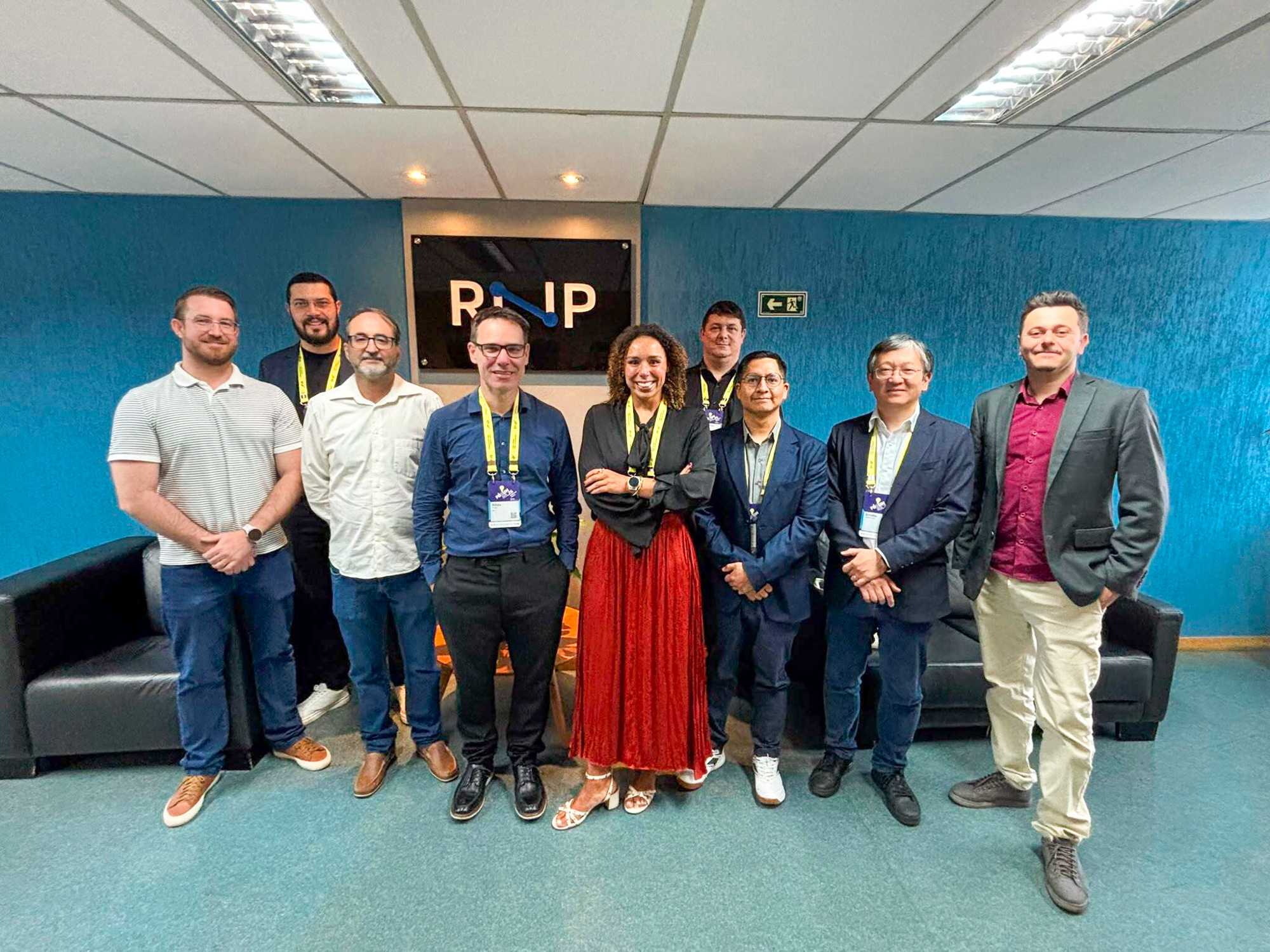
From strategy, Ana moved straight into practice. A dedicated security workshop put participants through real-life crisis scenarios, testing how teams handle cybersecurity incidents and organisational crises under pressure. Drawing on her European and cybersecurity perspective, she shared lessons the wider community can carry into their own incident planning.
Ana rounded off her programme with a visit to the RNP’s Security Operations Centre (SOC) and Network Operations Centre (NOC) in Brasília, where the team walked her through how they monitor their infrastructure and detect and respond to cyber threats in real time. Beyond the technical exchange, it was a chance to strengthen ties between the two teams, and to open the door to increased knowledge exchange and cooperation in these areas.
AI infrastructure: bringing a European perspective
Daniela Brauner took the AI conversation to a side meeting held alongside the RNP Forum, presenting on the EU AI Factories initiative and the role NRENs can play in supporting AI infrastructure. The meeting brought together Brazil’s National Strategic Alliance in HPC and AI, a government initiative led by the Ministry of Science, Technology and Innovation (MCTI). It includes key organisations across the country’s science, technology, and innovation ecosystem, among them RNP, LNCC, and Petrobras, working to federate and manage access to the new HPC/AI infrastructure in Brazil. It was a valuable opportunity to share how European approaches to HPC and AI infrastructure can help build stronger AI ecosystems elsewhere.
Cathrin Stover recognised for her contribution to the Brazilian Telemedicine University Network (RUTE)
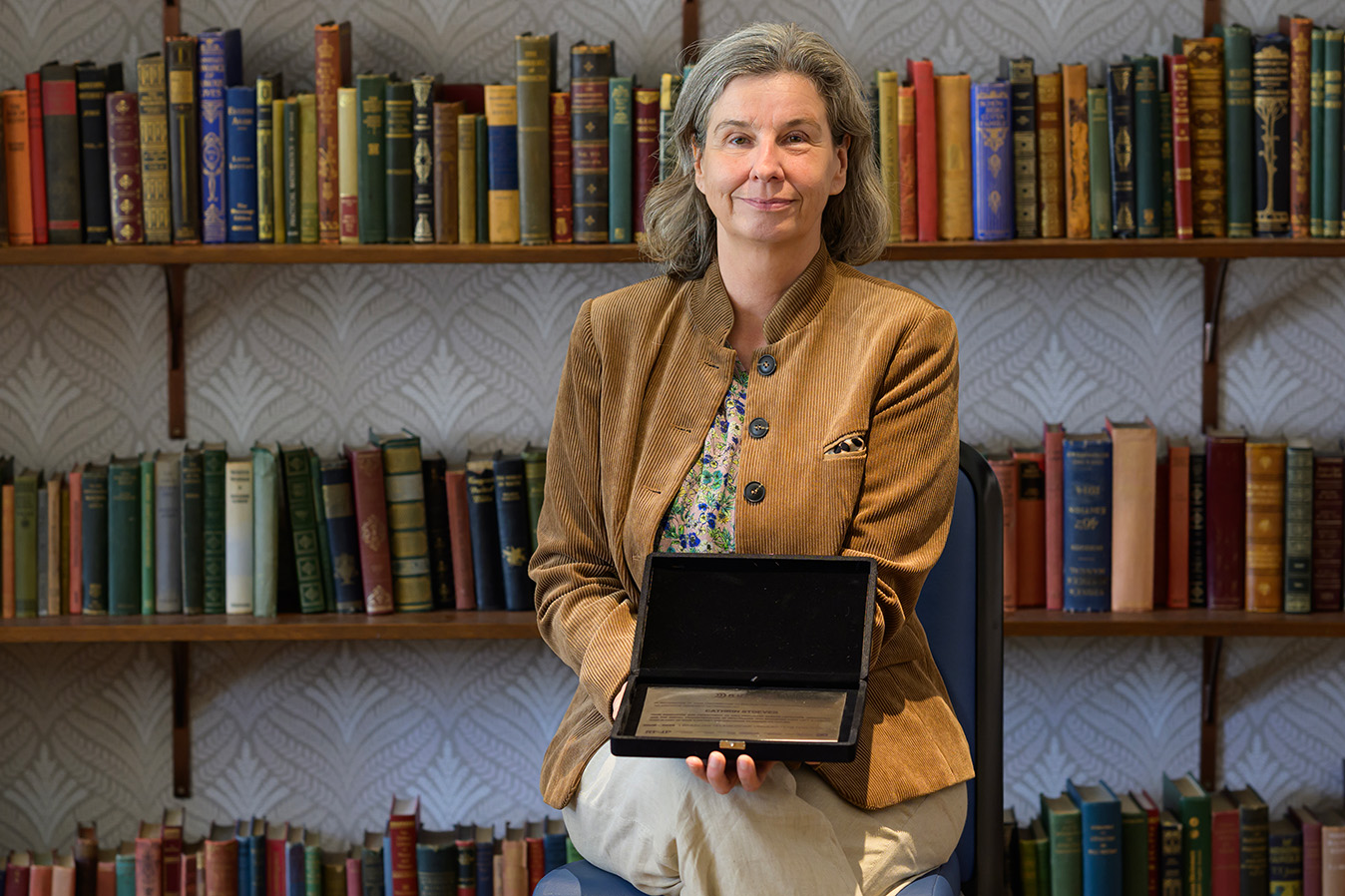
At the event, Daniela also received an award on behalf of our Chief Communications Officer Cathrin Stöver, recognising Cathrin’s contribution to international collaboration and to the advancement of digital health and education. The award came from RUTE, the Brazilian Telemedicine University Network, which is celebrating its 20th anniversary this year.
Cathrin’s connection to RUTE goes back to 2003, to her work helping establish the RedCLARA network and organisation as part of the ALICE project. ALICE was part of a wider programme that included 40 demonstrator projects, among which was Telemed. Cathrin identified Telemed as a natural fit for RedCLARA, working closely with Luis Messina (RUTE Coordinator) to establish the health network and connect it to the new transatlantic connectivity that was planned at the time to the GÉANT network. As a result, health stations across remote parts of Brazil could offer patients second opinions from hospitals in Rio de Janeiro, São Paulo, and even Germany. Telemed’s success laid the foundation for what later became RUTE, the network that is still running and expanding in Brazil today.
Reflecting on the milestone, Cathrin said: “I loved working in this environment, and it’s wonderful to see the network still running and expanding 20 years later. It means even more to know that I’m still remembered for my contribution after all this time. Thank you!”


