



A new chapter for ocean and earth sciences with the SUBMERSE project

Every day, almost all of the world’s internet traffic flows unseen along the seabed, carried by thousands of kilometres of submarine fibre-optic cables. These critical cables are the backbone of our connected society and fundamental to our national infrastructure. But what if they could do more than move data? What if they could be used to capture data from the ocean to understand more about this largely unknown part of our planet? What if they could also detect attempts to damage this undersea network of cables? In other words, what if they could sense the world around them to improve our understanding of earthquakes, ocean currents, and marine wildlife?
This is no longer science fiction. Through technologies like Distributed Acoustic Sensing (DAS) and State of Polarisation (SOP), submarine telecom cables can be transformed into dense arrays of environmental sensors. The EU-funded project SUBMERSE (SUBMarine cablEs for ReSearch and Exploration) is showing how, by bringing together researchers, National Research and Education Networks (NRENs), and industry partners we can help to unlock the scientific potential of this hidden infrastructure. Running from 2023 to 2026 with 24 consortium members, the project has already shown what becomes possible when telecommunications and science work hand in hand.
From Norway to Greece: Building a European sensing observatory
Over the past two years, SUBMERSE has turned Europe’s coastlines into testbeds, establishing a growing network of sites that demonstrate what fibre sensing can deliver.
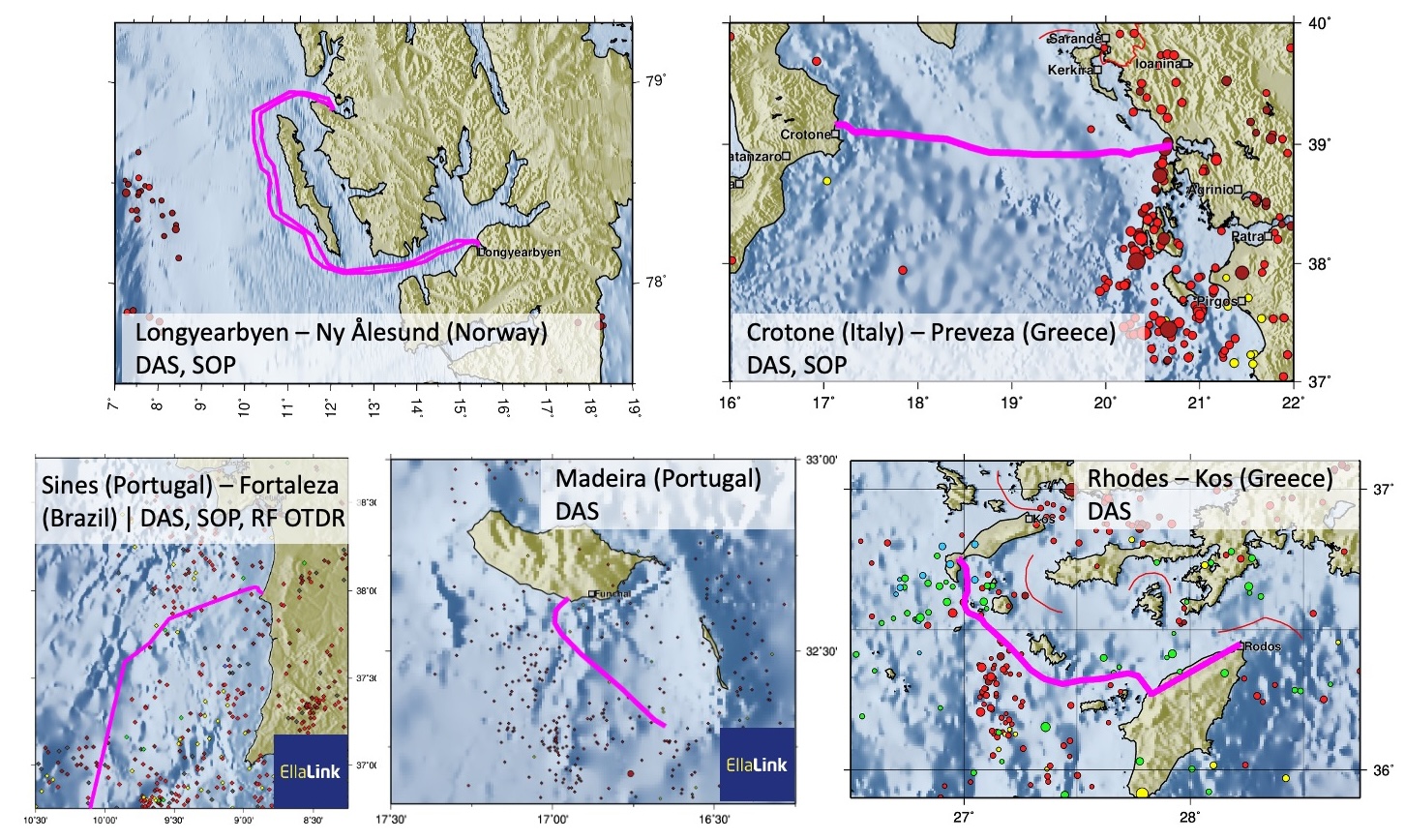
In Norway, the most advanced setup to date is already online. Three deployments there combine DAS, SOP, and a new calibrated system known as “UaH chirped pulse DAS.” Together, they are producing near real-time data for seismologists and marine biologists, providing the first continuous view of what is happening beneath the waves in the Arctic Ocean, one of the hardest regions on Earth to study.
Portugal hosts two sites, including on the EllaLink cable system that links Europe (Sines) with Latin America (Fortaleza), and Madeira. In one example, seismic activity in Turkey, over 4,500 km away, was recorded using DAS technology. This marks the first time such a long-range detection has been achieved, illustrating the extraordinary potential of this approach for monitoring seismic events between continents.
Meanwhile, in Greece, two sites are now operational. One of them monitors the Kefalonia Transform Fault Zone, the Mediterranean’s most seismically active region. For civil protection agencies, access to fibre-sensed data here could play an essential role in early warning systems and earthquake preparedness.
Taken together, these sites show what a distributed observatory built on existing submarine cable infrastructure could look like: a network of sensors collecting data from some of the most inaccessible parts of our planet for the benefit of society and a multitude of research communities.
Signals never seen before
The real breakthrough of the project is not just deploying new technology on cables, but showing the scientific value of the data they produce.
For the first time, earthquakes have been detected using both DAS and SOP data, demonstrating how these independent data points can reinforce one another. Crucially, the project has shown that it works without interfering with the internet traffic flowing through the very same cables.
In Portugal, researchers at the University of Lisbon have shown that DAS strain data near Madeira picks up a remarkable range of oceanographic variables: tides, wave heights, currents, and even whale songs. When compared with buoy measurements, the match was exact, showing that fibre infrastructure can serve as a cost-effective extension of traditional oceanographic tools.
New software is also transforming submarine cables into “virtual seismic observatories.” The OptoDAS Seedlink plugin, developed by ASN together with the scientific community, streams DAS data directly into existing seismology workflows. For scientists, it feels as natural as working with seismic stations—even though the data is travelling through undersea internet cables.
And the scale of available data is expanding quickly. SUBMERSE has released the world’s first and largest open-source submarine DAS earthquake dataset, with over 6,300 events. Building on this, project members trained a pioneering machine learning model, DeepDAS, using 92 million seismic records. The result: an AI that is tailored to detect earthquakes using submarine DAS data.
Collaboration at the core
Behind these achievements lies an unusual mix of organisations. The project brings together NRENs, scientific communities, and commercial organisations. Some provide cable access, others develop sensing technologies, while others analyse the signals or manage the data.
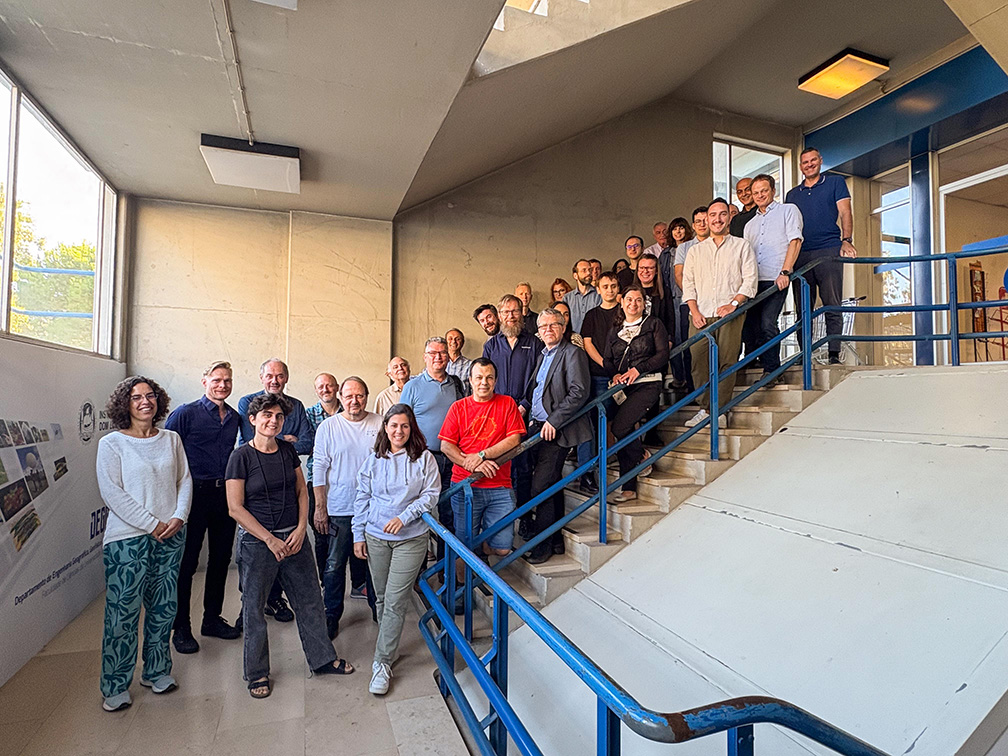
This collaboration is the project’s strength. As Chris Atherton, who leads one of SUBMERSE’s work packages, explains:
What makes SUBMERSE unique is how it connects different worlds. NRENs, cable operators, and research infrastructures each bring something essential. By working together, we can turn existing networks into scientific instruments, and gain insights into places on our planet that are otherwise out of reach.
Towards an ecosystem for fibre sensing
What SUBMERSE ultimately demonstrates is that fibre sensing is not just about clever technology. To thrive, it needs an ecosystem.
That ecosystem includes researchers who can analyse the signals, telecom and cable owners willing to open their infrastructure, and intermediaries like NRENs who can bridge the two. It requires global coordination to define standards, and to train the next generation of scientists to work with this new kind of data.
Piece by piece, that ecosystem is coming together. Early-career researchers are already learning to work with DAS and SOP data at training events such as the IASPEI Early Career School in Lisbon. Partnerships are forming around re-using existing fibre cables for science. And new tools are making DAS data feel like just another variable in a researcher’s daily processes.
By the time the project concludes in 2026, SUBMERSE will leave more than technical demonstrations. It will have shown how a hidden infrastructure, built to connect people, can also connect us to the deep ocean.
Looking ahead
The oceans are one of our last “new frontiers” of discovery. Submarine cables offer a unique chance to change that, by turning global telecommunication routes into scientific observatories. With SUBMERSE, Europe is leading this effort. The work so far shows not only what is technically possible, but what is achievable when different communities come together with a shared vision.
The story is still unfolding. But one thing is clear: our digital lifelines beneath the sea may also become our most powerful tools for understanding the Earth and its systems.
Read the full online magazine here


